
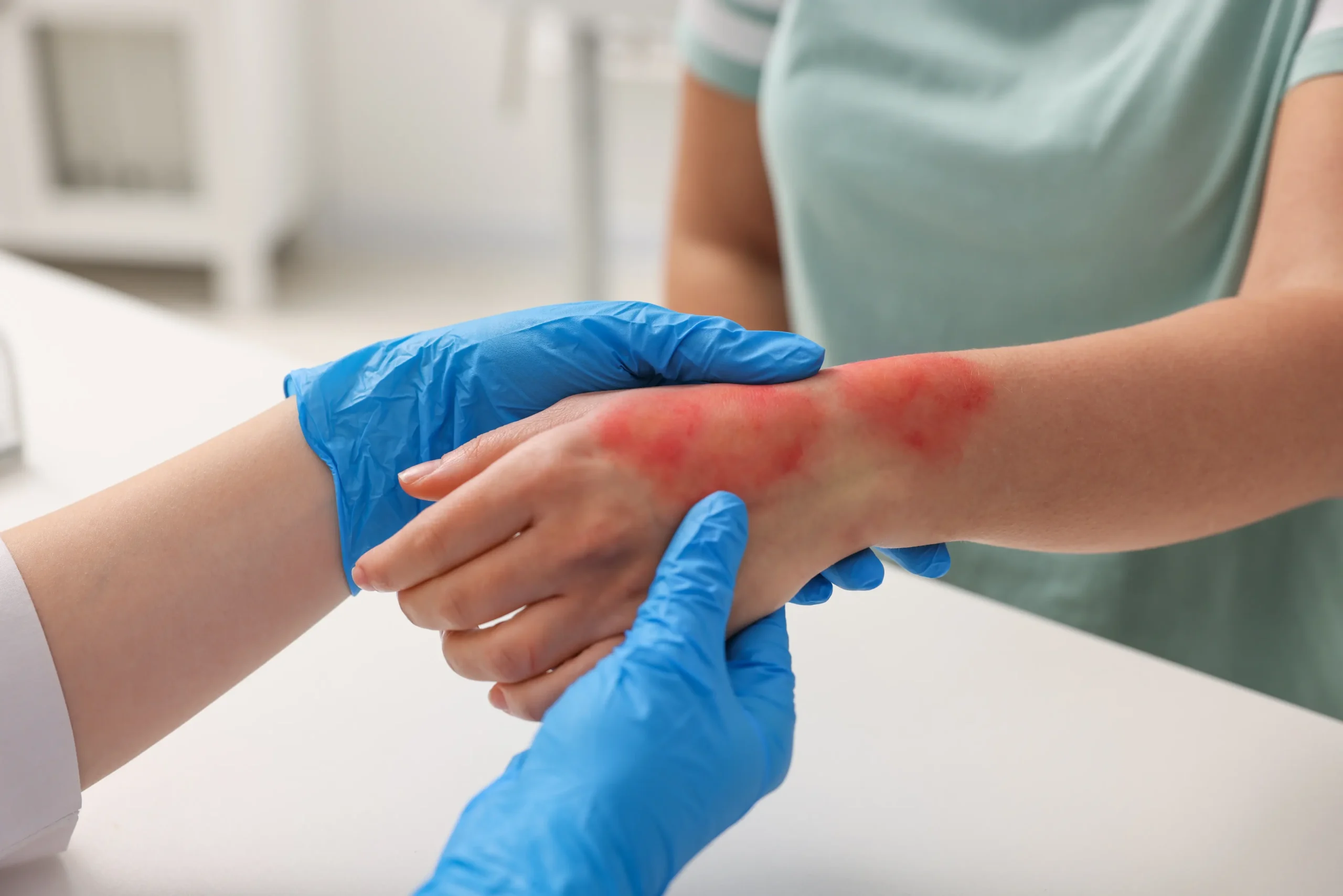
Burn injuries are among the most complex and challenging emergencies in medical care. Effective burn patient care during the first 24 hours is crucial for survival, preventing complications, and improving long-term outcomes. The initial management period, often referred to as the “golden hours” of burn care, involves systematic assessment, stabilization, and ongoing monitoring to address life-threatening issues immediately. This article outlines the essential steps and considerations in critical care for burn victims within the first 24 hours.
Content
1. Immediate First Aid for Burns
The first response after a burn injury significantly impacts the patient’s prognosis. First aid for burns includes removing the patient from the source of injury, stopping the burning process, and cooling the affected area with cool (not ice-cold) water for 10–20 minutes. Avoid applying oils, ointments, or home remedies, as these can interfere with proper burn injury treatment. Covering the wound with a sterile, non-stick dressing helps protect the skin from infection until professional care is available.
2. Assessment of Burn Severity
A structured burn assessment and severity evaluation is critical for guiding treatment decisions. Clinicians typically evaluate:
- Total Body Surface Area (TBSA) burned
- Depth of the burn (superficial, partial-thickness, full-thickness)
- Location of burns, especially on the face, hands, feet, or perineum
- Presence of inhalation injury
Accurate assessment helps determine fluid needs, the risk of burn shock, and the urgency of advanced interventions. Early documentation of vital signs and burn characteristics also informs subsequent burn resuscitation protocol decisions.
3. Airway Management in Burns
Airway compromise is a leading cause of early mortality in burn patients, particularly those with thermal injury or inhalation exposure. Airway management in burns may involve:
- Early intubation in patients with facial burns, soot in the mouth or nose, or signs of respiratory distress
- Administration of supplemental oxygen
- Monitoring for signs of airway edema, which can progress rapidly
Prompt airway stabilization prevents hypoxia and further systemic complications. For patients with suspected inhalation injury, clinicians often coordinate with critical care teams for continuous monitoring in an intensive care setting.
4. Burn Shock Management and Fluid Resuscitation
One of the most life-threatening complications in severe burns is burn shock, characterized by hypovolemia due to fluid loss from damaged skin. Early fluid replacement therapy is vital to maintain perfusion to organs and prevent multi-organ failure. Standard resuscitation formulas, such as the Parkland formula, guide initial fluid administration:
- Administer half of the calculated fluids in the first 8 hours post-injury
- The remaining half is given over the following 16 hours
- Monitor urine output, vital signs, and electrolyte balance to adjust therapy
Strict adherence to burn resuscitation protocol ensures adequate tissue perfusion without causing fluid overload, which can exacerbate pulmonary or peripheral edema.
5. Pain Control and Sedation
Burn injuries are intensely painful, and effective pain management is a critical component of burn patient care. Early interventions include:
- Administering intravenous analgesics, often opioids, titrated to patient response
- Considering procedural sedation for dressing changes or debridement
- Monitoring for adverse reactions to medications
Adequate pain control not only improves comfort but also reduces physiological stress, which can impact hemodynamic stability and wound healing.
6. Infection Prevention and Wound Care
The skin barrier is compromised in burn patients, making infection a major concern. Early burn injury treatment involves:
- Applying topical antimicrobial dressings
- Maintaining sterile techniques during wound care
- Early consultation with burn specialists for debridement or grafting
Ongoing monitoring for fever, leukopenia (or low white blood cell count), and other signs of systemic infection is essential, especially in the context of critical care for burn victims.
7. Nutritional and Metabolic Support
Burn patients experience hypermetabolism and increased protein catabolism. Nutritional support is essential within the first 24 hours:
- Early enteral feeding, if tolerated, supports immune function and wound healing
- Electrolyte and glucose levels should be monitored and corrected as needed
Integrating nutritional strategies into burn patient care enhances recovery and reduces complications related to malnutrition.
8. Continuous Monitoring and Multidisciplinary Care
The first 24 hours require frequent reassessment and coordination across multiple specialties, including nursing, critical care, respiratory therapy, and nutrition. Continuous monitoring of:
- Vital signs
- Urine output
- Electrolyte balance
- Oxygenation
Allows timely intervention in response to burn shock management, respiratory compromise, or infection. Nurses trained in burn care play a key role in implementing protocols, providing bedside assessments, and educating patients and families.
Continuing Education for Nurses in Burn Care
Because burn management is complex, staying updated through reliable nursing CEUs online is essential. Platforms like Fast CE for Less offer courses on topics such as critical care, burn resuscitation protocol, and emergency nursing skills. Many nurses benefit from options such as free 30 nursing CEUs no test, cheap nursing CEUs, or nursing CEU online no test to fulfill requirements for RN license renewal while advancing expertise in critical care for burn victims.
Conclusion
Managing burn patients during the first 24 hours is a high-stakes, multi-step process requiring rapid assessment, airway stabilization, fluid resuscitation, pain control, infection prevention, and nutritional support. Effective burn patient care depends on structured burn assessment and severity, strict adherence to burn resuscitation protocol, and coordinated multidisciplinary efforts. For healthcare providers, ongoing education through reputable nursing CEUs platforms like fastceforless.com ensures competency in delivering life-saving care to burn victims.
The early hours post-injury set the trajectory for recovery. By following these critical steps, healthcare providers can minimize complications, improve survival, and ensure a smoother rehabilitation process for burn patients.

Julian is an expert in all things technology. He enjoys writing blogs about how to use the latest software and hardware on the market, while also providing advice for using existing technology more effectively. His favorite pastimes include reading comic books and playing video games.